
5 Must-Have Companion Plants for your Garden
Companion planting is by far one of my favourite parts of gardening. The way nature can work together in harmony is truly magical and magnificent. It reminds me that we still have so much to learn from nature :)
In my YouTube Video this morning I discussed 5 plant combinations that work well together. These combinations are:
1) Marigolds and Tomatoes to attract ladybugs and lacewigs that will prey on aphids
2) Basil and Tomatoes that reples mosquitoes and floes and attracts in pollinators
3) Nasturtium and Cabbages that deters aphids and attracts predatory beetles (nasturtium is also attractive to the white butterfly, did you know they'll lay their eggs on the nasturtium before your brassicas?)
4) Cilantro (coriander) and Cucumbers. The cilantro attracts beneficial insects like hoverflies. That reminded me of how I manage white flies on our lemon tree. Hoverflies eat white flies so plant alyssum, coriander and avender around the base of your lemon trees.
5) Lastly was dill and carrots to again attract ladybugs and predatory beetles. Dill acts as a nectar source, so if any aphids or caterpillars are nearby that can harm your carrots, the preedatory beetles and ladybugs will eat them.
These are just 5 examples :) If you are curious to know more combinations please feel free to download my FREE Companion Planting Guide which covers 20 plants to grow together AND 20 plants to avoid growing together along with rationale.
Helping your garden maintain a healthier ecosystem reduces (even eliminates) the need for chemical pest control
Can you see how working alongside nature and making the most of companion planting can benefit everything? Not just your garden, but your health and your families too, the ecosystem and yes even mother earth. I believe it is our job to try and work alongside her for the benefit of all, a delightful energy exchange.
Top 5 Tips for Companion Planting
1. Know Your Allies: Pair plants that benefit each other. For example, tomatoes thrive alongside basil, which can improve their flavor and repel pests.
2. Maximize Space: Use taller plants to provide shade for shorter ones. Corn can support climbing beans, maximizing vertical space and sunlight.
3. Diversify Pest Control: Incorporate flowers like marigolds to attract beneficial insects that prey on harmful pests.
4. Enhance Soil Health: Legumes, such as peas and beans, fix nitrogen in the soil, benefiting nearby plants that require nutrient-rich soil.
5. Timing Matters: Plant early and late varieties together to extend harvest periods and ensure continual growth.
Want to know which other plants will help you achieve the above?
Ready to elevate your gardening game? I have another offer for you :)
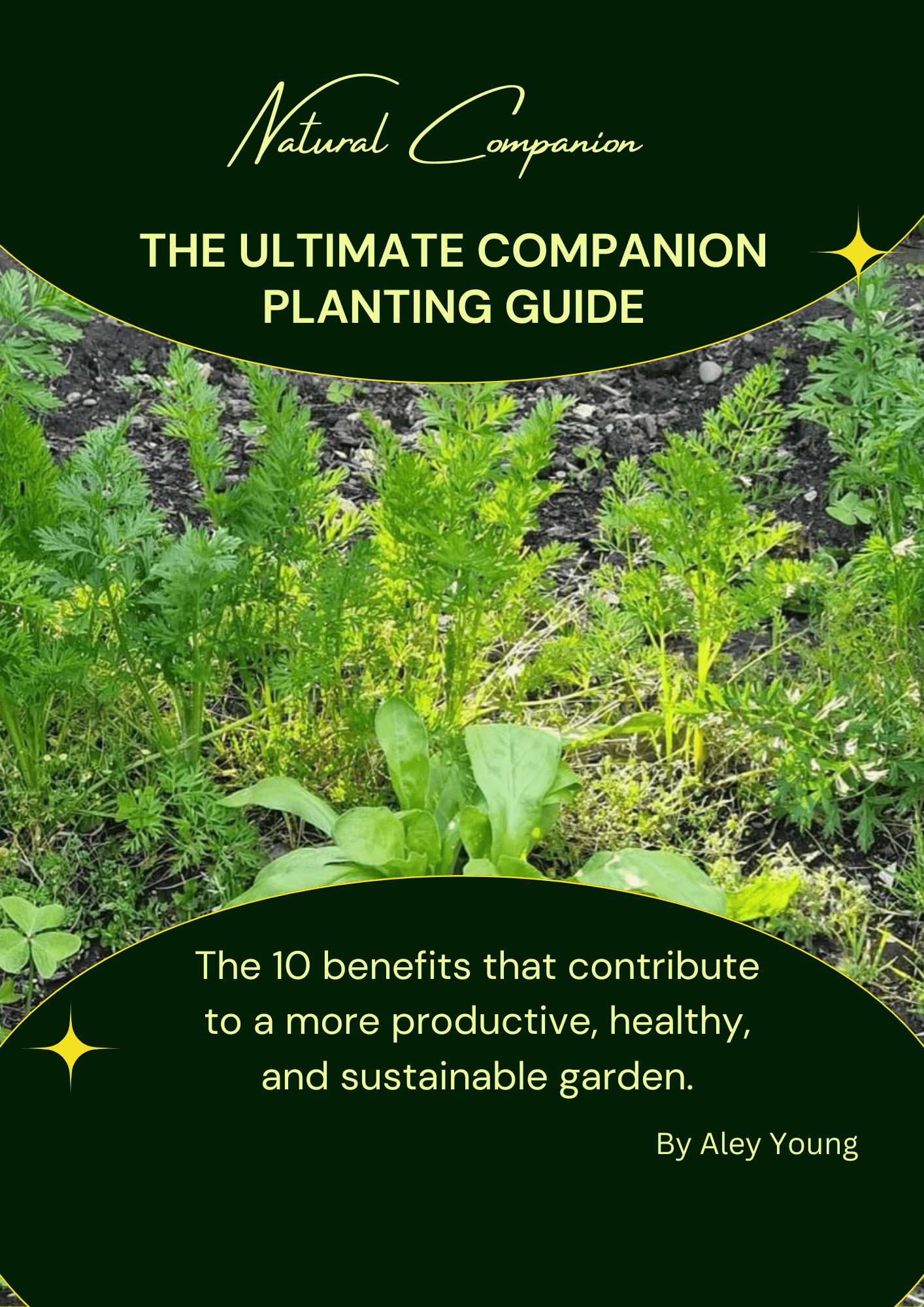
The Ultimate Companion Planting Guide.
This guide includes all the information the free guide includes, PLUS it also goes more in depth about how companion planting can benefit your garden by exploring the 10 benefits of Companion Planting with suggestions for which plants to grow together to achieve this goal. Don't just stop at attracting in beneficial bugs or deterring non beneficial bugs and insects, you can achieve so much more in your garden with a little more knowledge and guidance :)
May this info bless you and all those around you,
From my heart to yours,
Aley xx
Popular posts
🌀 The Headache, The Doubt, and the Truth About Pressure (BigSwim: 2km)
By Aley Young on June 7, 2025
Unlocking Personal Energy for Transformation
By Aley Young on Nov 11, 2024
Actions and the Energy of Intent: How Small Steps Can Lead to Big Changes
By Aley Young on Nov 25, 2024
How Shifting Your Mindset can Change Your Life
By Aley Young on Nov 14, 2024
An update about this blog

I'm Aley Young, the heart behind this blog.
It was a soft, grounded space where healing, personal growth, real food, and gentle truth meet.
A living journal - a place where I shared the moments, lessons, and inner shifts that have shaped my own journey, from nervous system healing and regulation to motherhood, identity, and becoming alongside the slower, earthier parts of life: the garden, the sourdough starter, the kitchen.
But now it is retired ...
Thank you for being here - some of you for years now.
After a lot of reflection, I've decided to step back from this chapter and follow a new calling: natural gardening. It's where my heart is right now, and I want to give it everything.
But nothing here is disappearing.
- The courses are still here - log in anytime with your existing account.
- The blog is still up to read, and the podcast is still here to listen to, whenever you like.
- Nothing is being taken away. I'm just not adding to it anymore.
If you've walked through this content with me, thank you. Truly. It mattered.
And if you're curious where I'm headed next - into the soil, into growing things, into a slower and simpler kind of healing - I'd love for you to come along.
[Visit Natural Companion → https://www.naturalcompanion.co.nz]
With gratitude,
Aley